
Plan Your Workforce with the Same Rigor as Your Budget
Use AI-powered forecasting to align headcount, skills and org design with business strategy, before gaps become crises.
The problem
Why modern workforce planning needs AI
Workforce planning happens in spreadsheets, disconnected from real skills or engagement data.
Headcount decisions are reactive, not tied to strategic forecasting.
Leaders can't model the impact of attrition, growth, or reorganization scenarios.
Skills gaps aren't factored into hiring and planning decisions.
Workforce plans go stale the moment they're finalized.
HR and Finance often plan headcount independently, with misaligned assumptions.
How Vadal.ai solves this
Workforce Planning, reimagined
AI-Powered Scenario Modeling
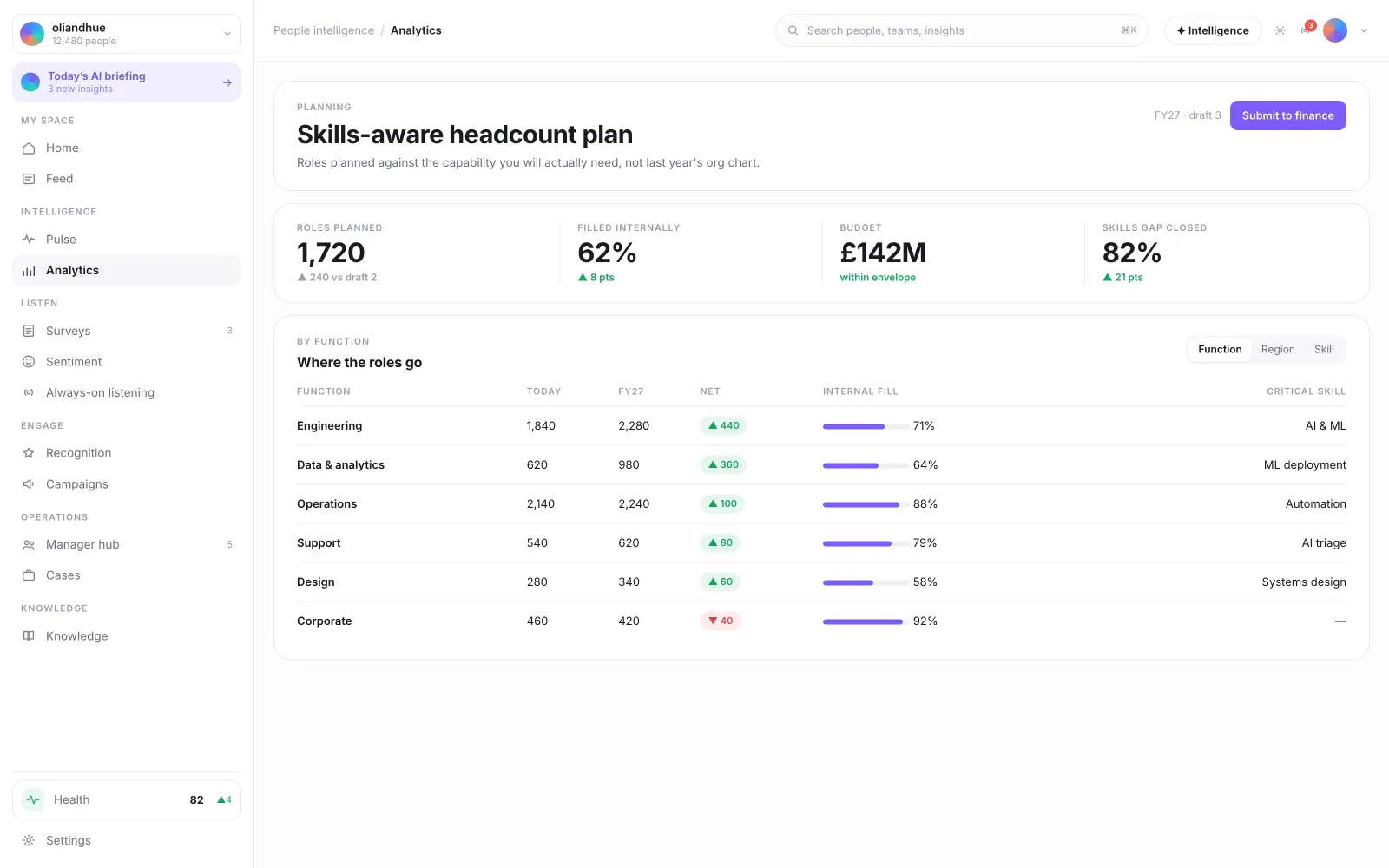
Skills-Aware Planning
Real-Time Plan Updates
Cross-Functional Alignment
Core capabilities
Inside Workforce Planning
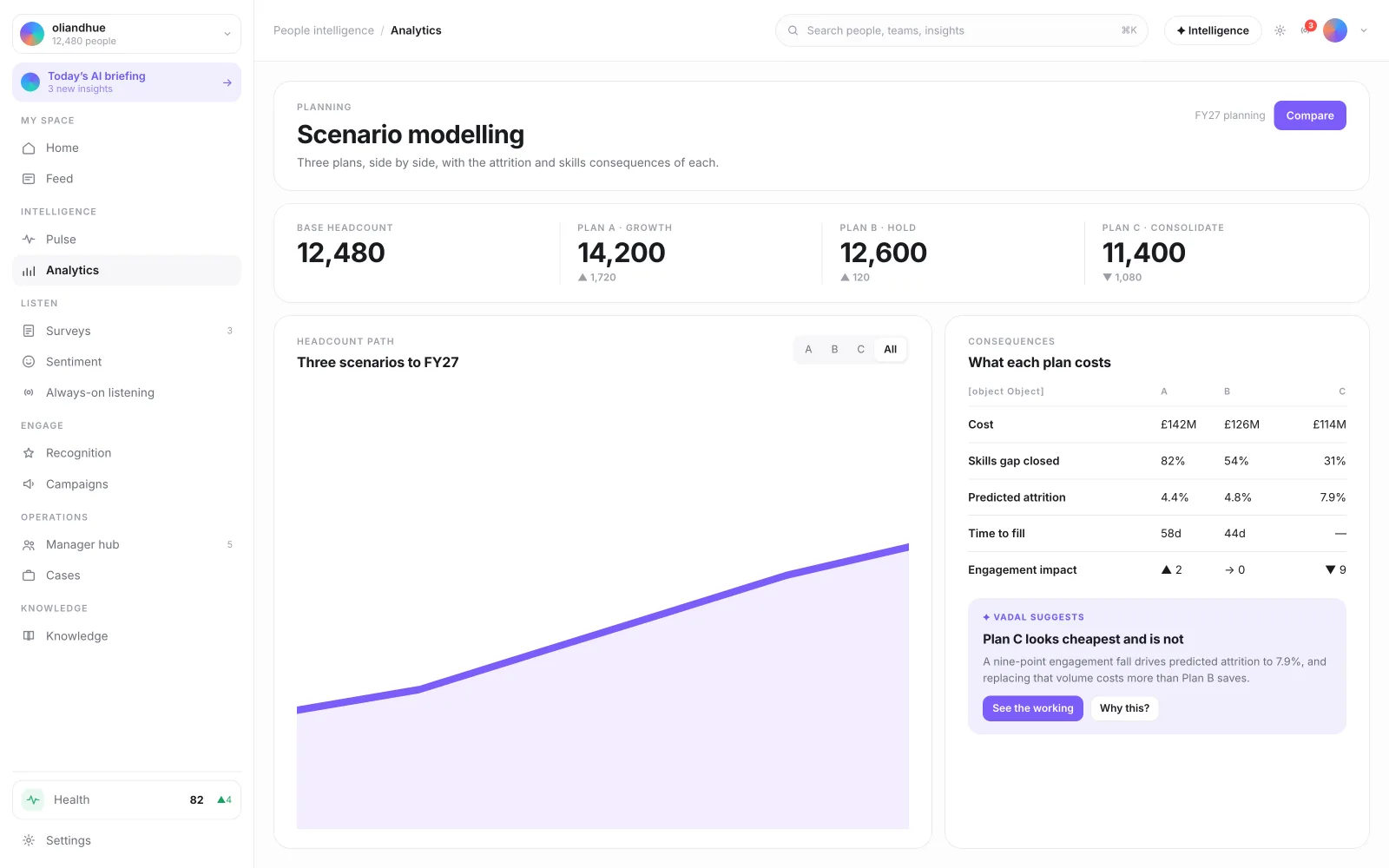
Scenario Modeling
Model the impact of growth, attrition, restructuring or new strategic initiatives on headcount and cost before committing.
See it in detailSkills-Aware Workforce Plans
Factor in current skills data and gaps directly into hiring and development planning, not just headcount numbers.
See it in detailLiving Workforce Plans
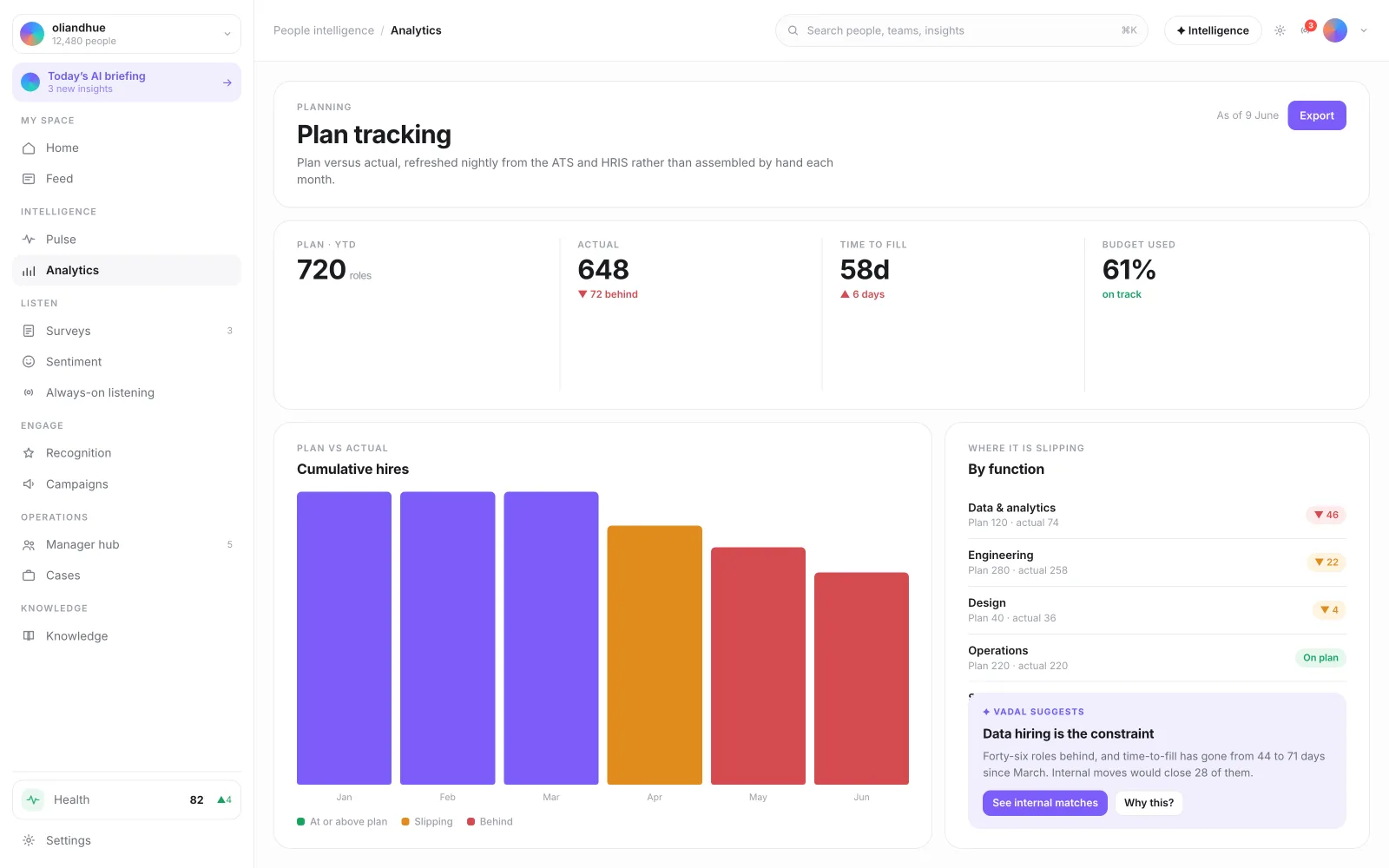
Keep plans continuously updated with real attrition, hiring and business data, rather than static once-a-year documents.
See it in detailHR-Finance Alignment View
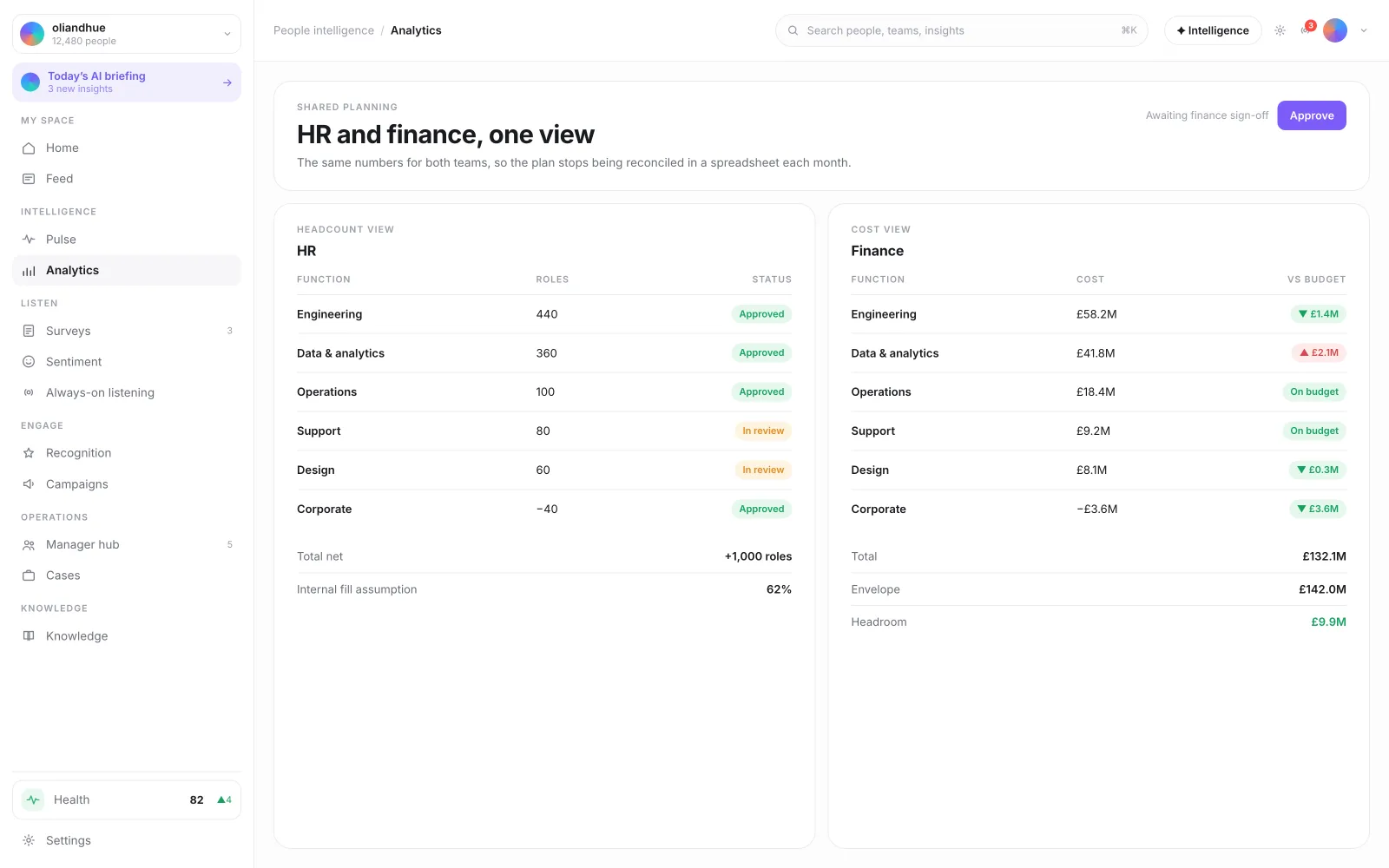
Give HR and Finance a shared, common view of workforce plans and assumptions to reduce planning friction.
See it in detailCapability 01
Scenario Modeling
Model the impact of growth, attrition, restructuring or new strategic initiatives on headcount and cost before committing.
- Compare growth, attrition and restructuring scenarios side by side
- See headcount and cost impact before committing
- Make workforce decisions with strategic foresight
Capability 02
Skills-Aware Workforce Plans
Factor in current skills data and gaps directly into hiring and development planning, not just headcount numbers.
- Plans reflect real capability gaps, not just headcount
- Hiring priorities grounded in actual skills data
- Development and hiring planned together, not separately
Capability 03
Living Workforce Plans
Keep plans continuously updated with real attrition, hiring and business data, rather than static once-a-year documents.
- Plans update continuously with live attrition and hiring data
- No more stale once-a-year planning documents
- Variance from plan is visible as it happens
Capability 04
HR-Finance Alignment View
Give HR and Finance a shared, common view of workforce plans and assumptions to reduce planning friction.
- One shared view of plans and assumptions
- Ends HR and Finance planning from different numbers
- Less friction, faster planning cycles
Product screens
Workforce Planning, screen by screen
AI inside
The intelligence working under the hood
Business outcomes
What changes for the business
- More Strategic, Less Reactive Hiring
- Reduced Planning Cycle Time
- Better HR-Finance Alignment
- Improved Preparedness for Growth or Disruption
- Reduced Risk from Undetected Skills Gaps in Plans
How teams use it
From challenge to outcome
A large enterprise planned headcount in spreadsheets disconnected from real skills and attrition data, leading to reactive, last-minute hiring.
Deployed Vadal.ai's Workforce Planning to model scenarios and keep plans continuously updated with live data.
More strategic hiring decisions, reduced planning cycle time, improved HR-Finance alignment.
Illustrative scenario, named customer stories coming soon.
Integrations
Plays well with your stack
FAQs
Questions, answered
Yes, scenario modeling lets you compare the headcount, cost and skills impact of different strategic paths side by side before committing to one.
It's designed to complement Finance's process by giving HR and Finance a shared, data-grounded view of workforce assumptions, not to replace Finance's ownership of budget decisions.
Plans account for current skills gaps identified through Skills Intelligence, so hiring and development recommendations reflect actual capability needs, not just headcount targets.
Plans are designed to update continuously as real attrition, hiring and business data come in, rather than being fixed once and revisited only annually.
Keep exploring
Related products
Get started