
Keep the people you can't afford to lose
Identify attrition risk early with AI-driven predictive analytics, understand exactly what's driving people out, and retain top talent with data-backed actions that land before the resignation letter does.
- AI attrition-risk prediction per team
- Driver analysis behind every risk flag
- Retention playbooks for managers
- Regrettable-loss tracking over time
See it coming
Attrition warns you, if you're listening
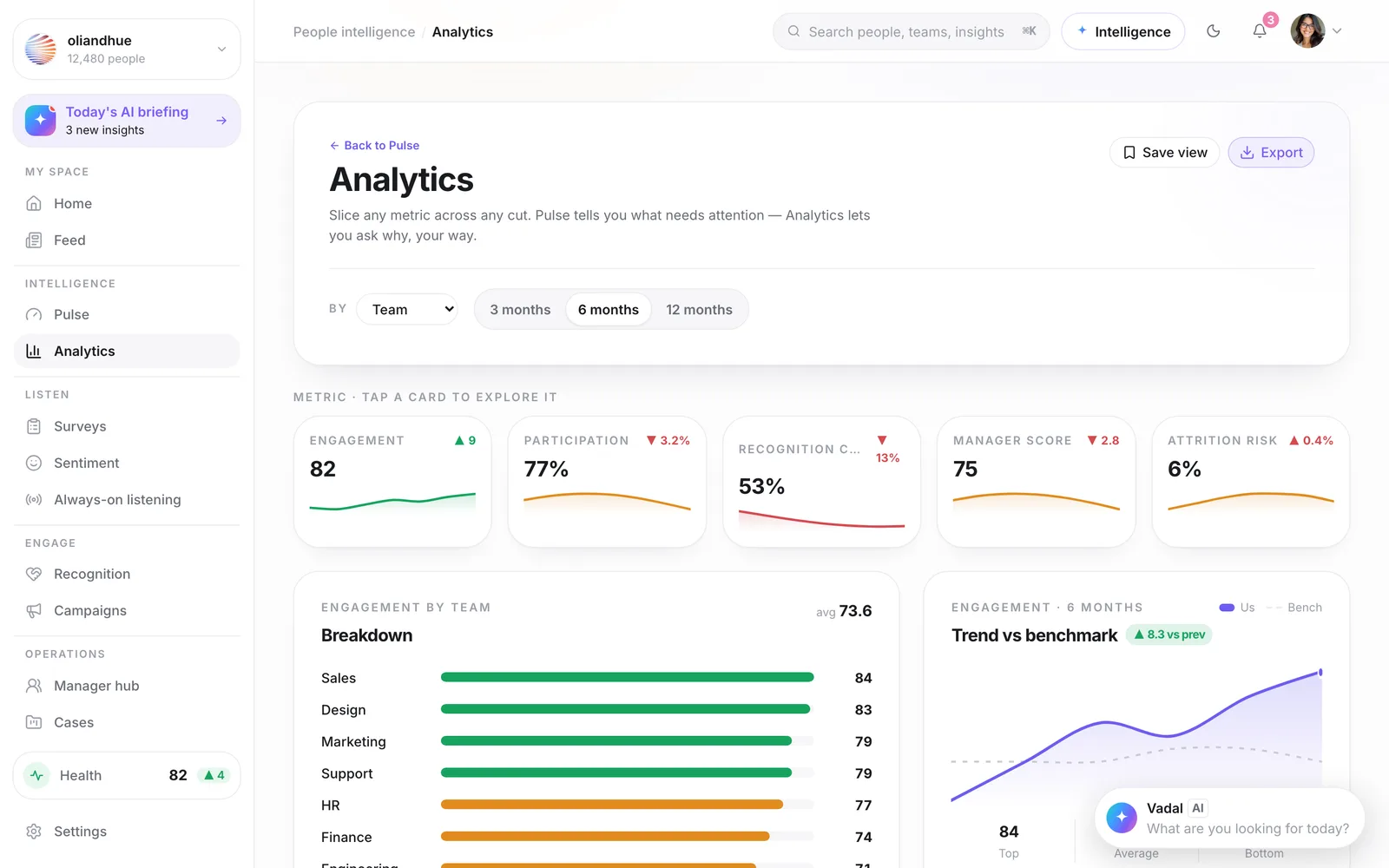
Resignations look sudden but rarely are. Vadal.ai reads engagement, sentiment, lifecycle and workload to flag at-risk teams weeks before the exit interview, factors spelled out.
- Risk flags with explainable contributing factors
- Team and segment heatmaps, updated continuously
- Early-warning alerts routed to the right manager
Act on it
From risk flag to retention play
A prediction without a plan is just anxiety. Every risk flag comes with interventions that are assigned, tracked and re-measured, so you know what actually kept people.
- AI-recommended retention actions per driver
- Stay-conversation guides for managers
- Impact tracking against regretted attrition
The impact
What good looks like with Employee Retention
average early warning before regretted exits
lower first-year attrition
reduction in regretted attrition overall
Illustrative sample data, to be replaced with Vadal's verified proof before launch.
“We used to find out why people left in exit interviews. Now we find out six weeks earlier, while there's still time to do something. Regretted attrition is down by a fifth.”
FAQs
Questions, answered
AI models read patterns across engagement scores, sentiment, lifecycle feedback and behavioral signals that historically precede exits in your organization. Flags come with contributing factors and confidence levels, never a black-box score, and anonymity thresholds still apply to everything underneath.
Risk is surfaced at team and segment level to protect privacy while still being actionable. Managers see where risk is concentrated and why, enough to have the right conversations without surveillance.
Keep exploring