
Know How Your Workforce Really Feels, in Real Time
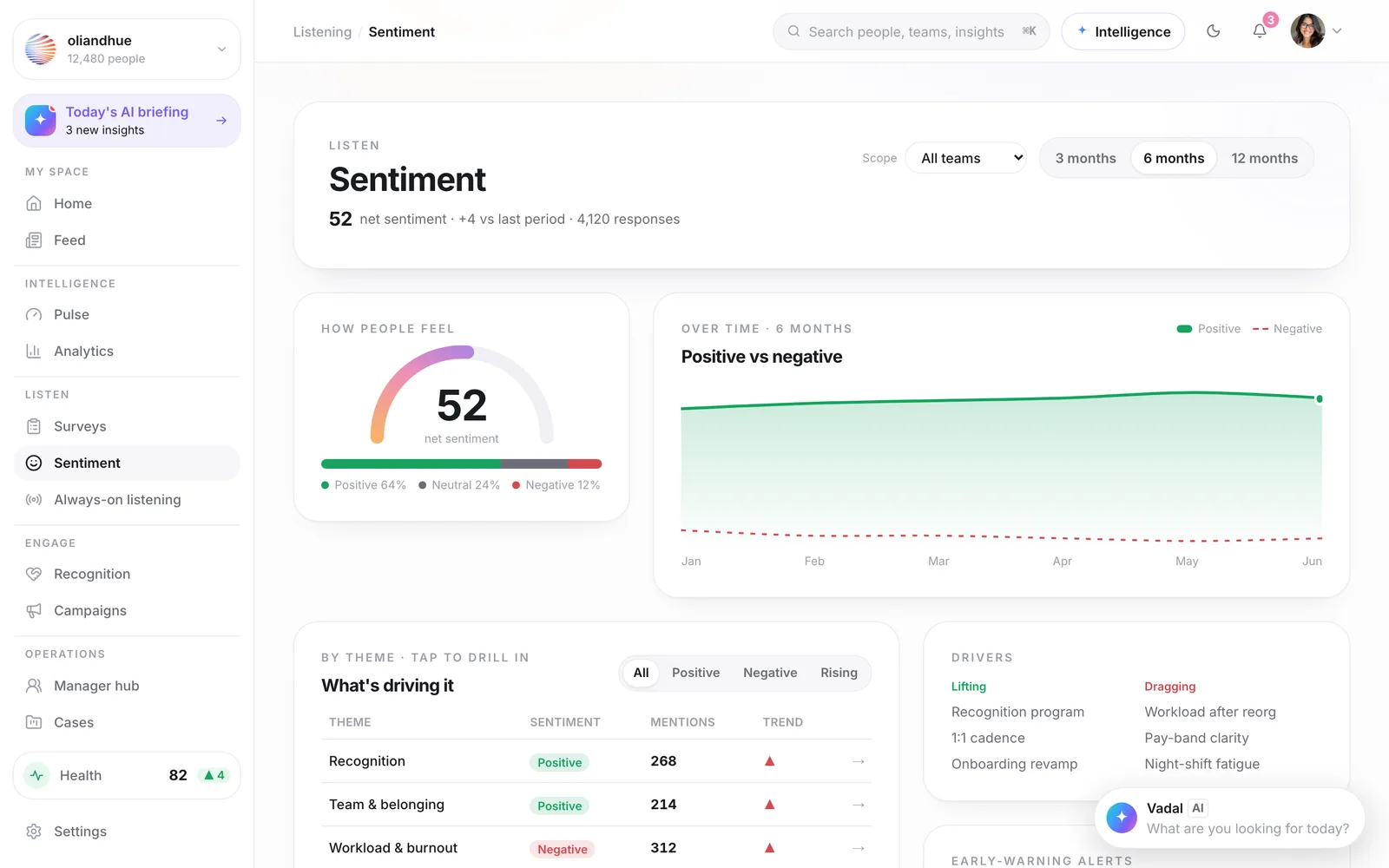
Continuously analyze sentiment from surveys, conversations and feedback to detect disengagement and risk before it shows up in your attrition numbers.
The problem
Why modern sentiment intelligence needs AI
Sentiment is only measured once or twice a year via formal surveys.
Open-text feedback is too time-consuming to read and categorize manually.
Warning signs of disengagement appear only after someone resigns.
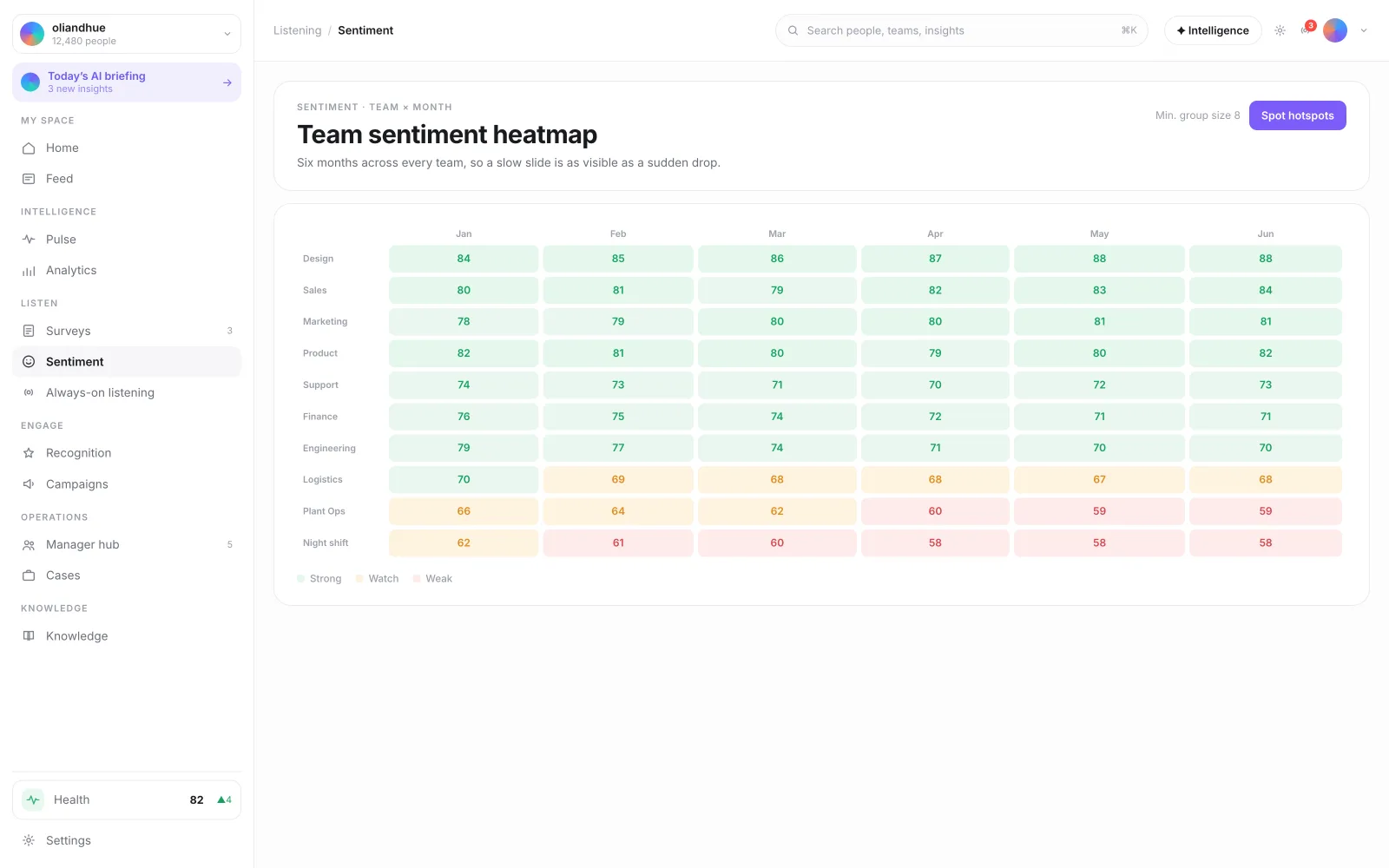
No way to track sentiment trends by team, manager or location over time.
Leaders don't know if morale is improving or declining until it's too late.
How Vadal.ai solves this
Sentiment Intelligence, reimagined
Continuous Sentiment Capture
AI Emotion & Theme Detection
Predictive Risk Signals
Manager-Level Alerts
Core capabilities
Inside Sentiment Intelligence
Always-On Sentiment Tracking
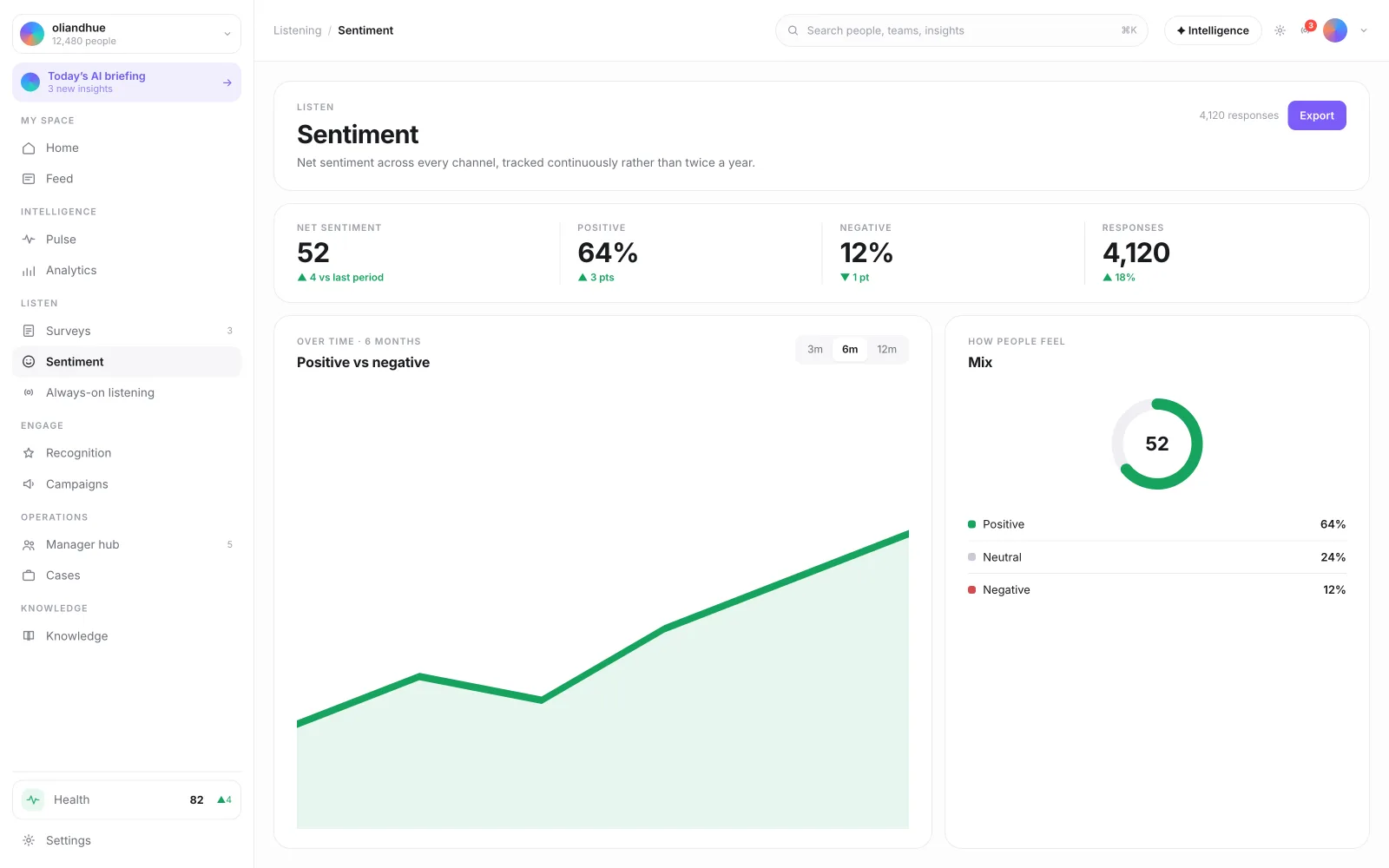
Capture sentiment continuously through conversations, pulse checks and feedback channels, not just annual surveys.
See it in detailAI Theme & Emotion Analysis
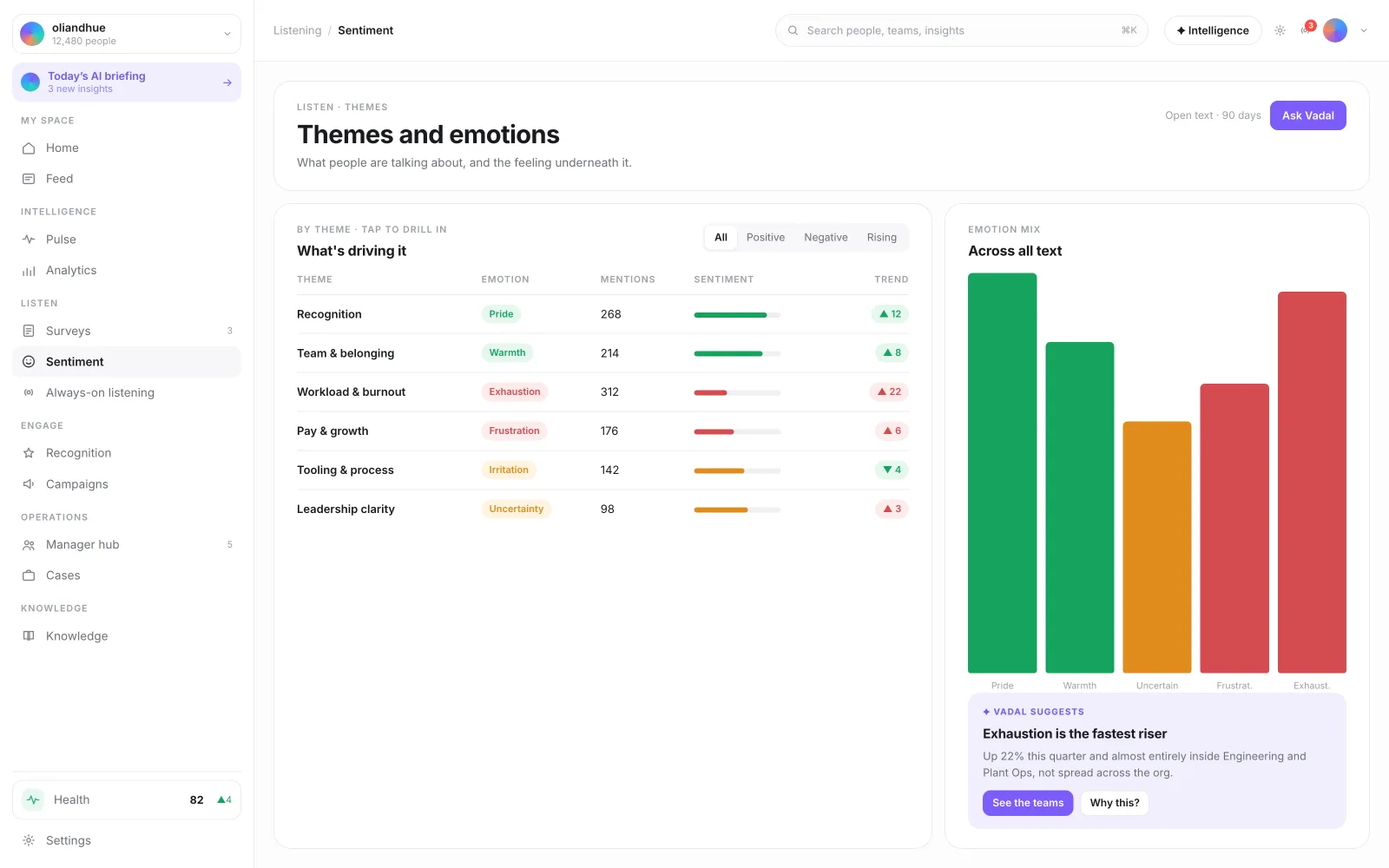
Automatically cluster open-text feedback into themes and emotional tone, surfacing what employees are really saying at scale.
See it in detailAttrition Risk Signals
Identify early indicators of disengagement or flight risk based on sentiment patterns over time.
See it in detailProactive Manager Alerts
Notify managers when sentiment shifts meaningfully for their team, with suggested next steps.
See it in detailCapability 01
Always-On Sentiment Tracking
Capture sentiment continuously through conversations, pulse checks and feedback channels, not just annual surveys.
- Continuous signal instead of one or two survey snapshots yearly
- Sentiment captured wherever employees already give feedback
- Track morale trends by team, manager and location over time
Capability 02
AI Theme & Emotion Analysis
Automatically cluster open-text feedback into themes and emotional tone, surfacing what employees are really saying at scale.
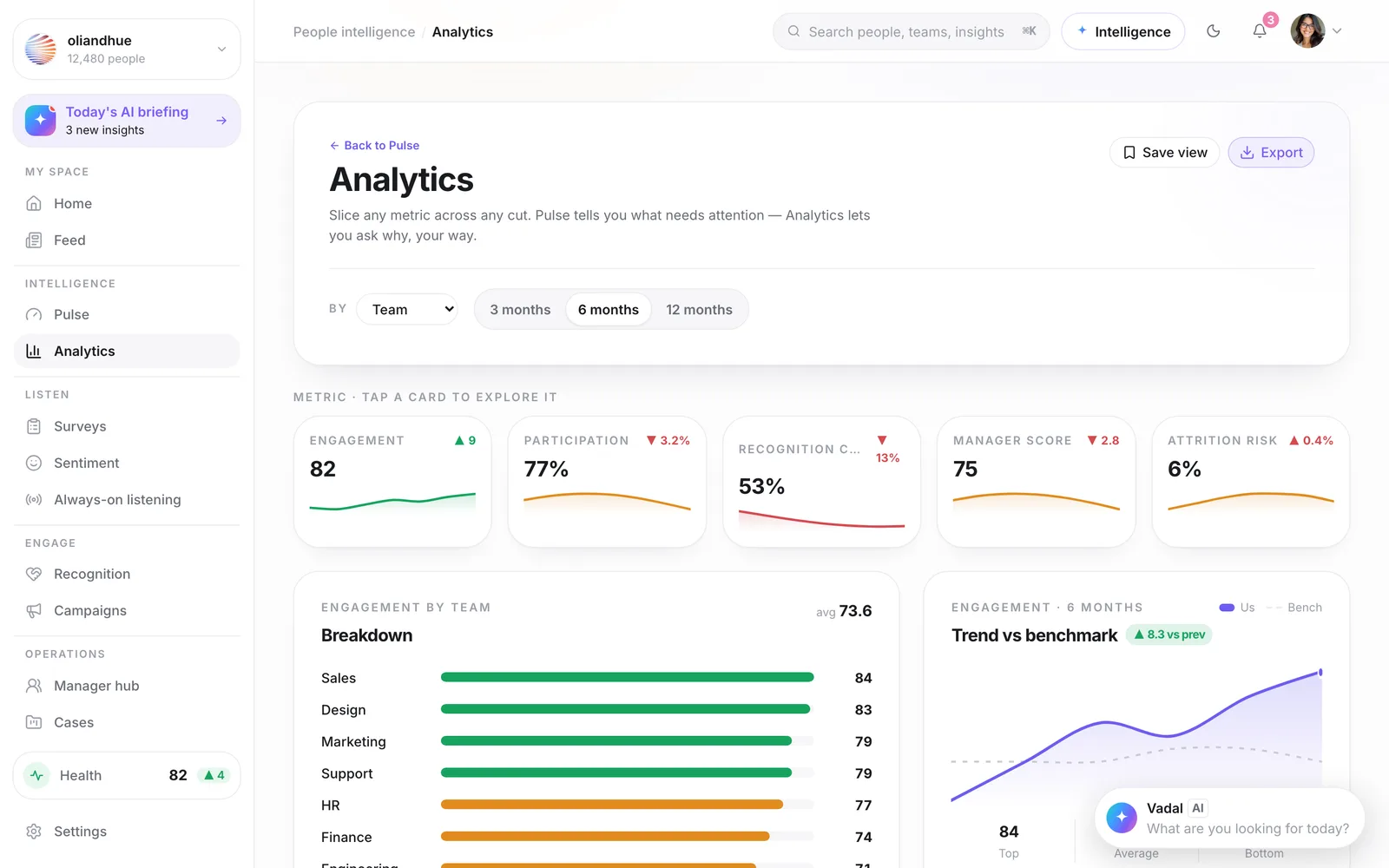
- Thousands of open-text comments analyzed automatically
- Themes and emotional tone surfaced without manual reading
- Understand what employees are really saying, at scale
Capability 03
Attrition Risk Signals
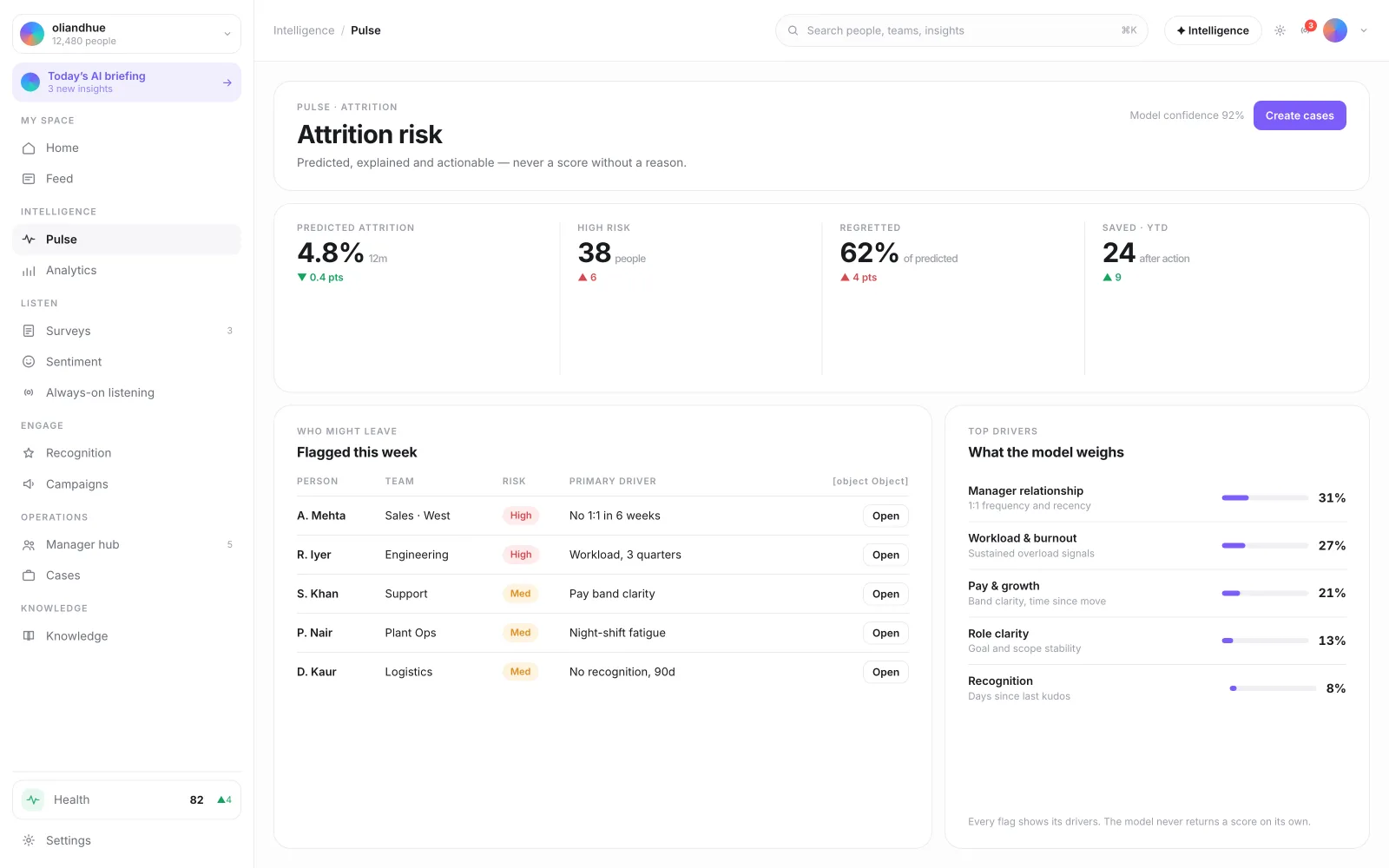
Identify early indicators of disengagement or flight risk based on sentiment patterns over time.
- Spot disengagement patterns before resignations arrive
- Directional risk signals prompt timely conversations
- Focus retention effort where sentiment is trending down
Capability 04
Proactive Manager Alerts
Notify managers when sentiment shifts meaningfully for their team, with suggested next steps.
- Managers alerted the moment team sentiment shifts meaningfully
- Every alert comes with suggested next steps
- Faster, more consistent manager response to morale changes
Product screens
Sentiment Intelligence, screen by screen
AI inside
The intelligence working under the hood
Business outcomes
What changes for the business
- Earlier Detection of Disengagement
- Reduced Regrettable Attrition
- Faster Response to Morale Shifts
- Improved Manager Awareness
- More Honest, Continuous Feedback Culture
How teams use it
From challenge to outcome
A global technology company only discovered team disengagement after high performers began resigning.
Deployed Vadal.ai's Sentiment Intelligence to track sentiment continuously and flag risk early.
Earlier interventions, reduced regrettable attrition, improved manager response time.
Illustrative scenario, named customer stories coming soon.
Integrations
Plays well with your stack
FAQs
Questions, answered
The AI analyzes sentiment from feedback explicitly submitted through surveys, pulse checks, and opt-in conversational channels, not private personal communications outside the platform.
By default, sentiment trends are shown in aggregate at the team level to protect psychological safety; individual-level flags, where used, should be a deliberate, disclosed configuration decision.
Prediction accuracy improves with more historical data and should be treated as a directional risk signal to prompt conversation, not a certainty.
It's designed to complement, not replace, formal surveys, continuous sentiment tracking catches shifts between survey cycles, while structured surveys still provide statistically robust benchmarking.
Keep exploring
Related products
Get started